
How Paid Ads Turn Into Real Leads
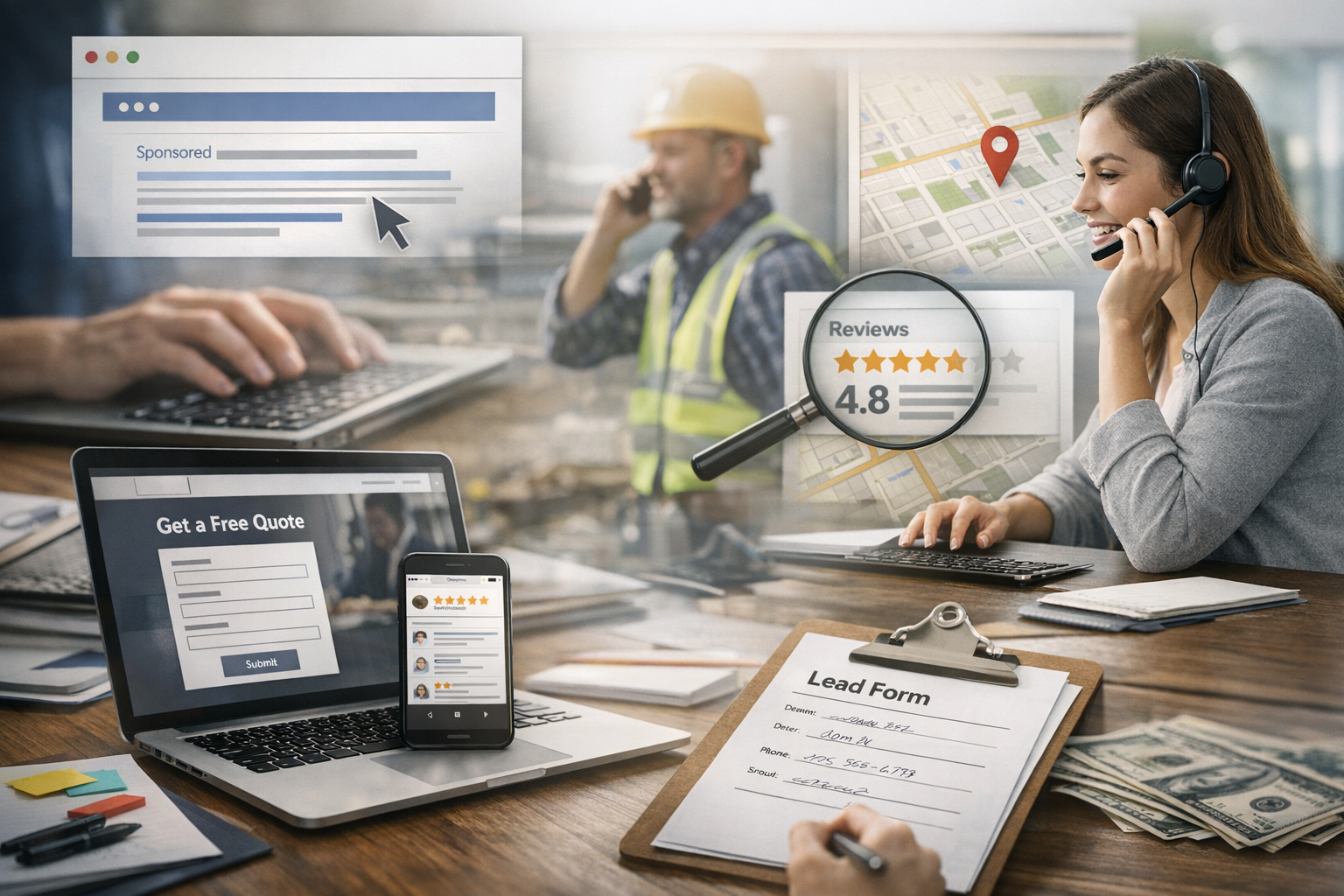
Paid ads get a lot of attention because they can move fast. That part is true. You can turn on a campaign and start getting clicks the same day. But clicks aren’t leads, and leads aren’t customers. That gap is where a lot of small businesses lose money.
I’ve seen it plenty of times with HVAC companies, plumbers, electricians, roofers, local restaurants, boutiques, medical clinics, and shops all across Florence, AL, Muscle Shoals, AL, Sheffield, AL, Tuscumbia, AL, and the rest of The Shoals. Same story. The ad brought traffic. The website didn’t carry its weight. Or the phone rang once and then nothing. Or the owner was too busy running jobs to keep up with the inquiries. That’s real life.
If you’re spending money on ads, the whole thing has to work. The ad, the landing page, the follow-up, the phone call, the reputation, the branding, the timing. Miss one piece and you’re paying for attention that never turns into work.
Ads don’t create trust by themselves
A paid ad is just the first handshake. It gets somebody to notice you. That’s it.
If someone clicks your ad and lands on a slow website, or a page that looks like it hasn’t been touched since 2016, they’re gone. Same if the site doesn’t work well on mobile. And these days, a lot of local traffic is mobile. Folks are standing in a parking lot, on a job site, at the kitchen table, or trying to find an emergency plumber after hours. They’re not going to wrestle with a broken page.
Most business owners don’t realize how many leads they’re losing from an outdated website until someone finally shows them the numbers. The ad may be doing its job. The site may not be.
That’s why website performance matters so much. Not just speed, though that matters. The page has to be clear. Who are you? What do you do? Where do you serve? Why should somebody trust you? And what should they do next? Call. Fill out the form. Book an appointment. Ask for a quote.
No mystery. No scavenger hunt.
Your landing page has one job
A lot of small businesses send paid traffic to the homepage. That can work sometimes, but it usually isn’t the best move. Homepages are busy. They try to do too much. A better page is focused on one thing.
If you run an HVAC company in Jackson, TN, and your ad is for furnace repair, the page should talk about furnace repair. Not the history of the company. Not five unrelated services. Not a giant wall of text. Just the offer, the service area, the trust points, and the next step.
That same idea applies to a landscaping business in Tuscumbia, a construction company in Sheffield, or a medical clinic in Florence. People respond better when the message lines up with the ad they clicked.
And if your branding is all over the place, that hurts too. Maybe the Facebook page says one thing, the website says another, and the Google Business Profile has old hours from two years ago. Folks notice that stuff. They may not say it out loud, but they feel it. Inconsistent branding makes a business look smaller and less steady than it really is.
Google matters before and after the click
Paid ads can bring traffic, but a lot of people still check Google before they call. They look up reviews. They read your business profile. They see if your hours are current. They look for photos. Sometimes they compare you with the company down the road or a bigger regional player that has a slicker online presence.
That’s where local SEO and Google Business Profile work come in. If someone in Florence or Muscle Shoals searches for an electrician near me, your ad might get the first click. But if your Google profile looks empty or your reviews are rough, the lead may drift somewhere else.
This is one reason cheap SEO work causes so much frustration. A business pays somebody to “do SEO,” but all they get are weird links, thin blog posts, and no real movement in Google rankings. Meanwhile the site still doesn’t show up for local searches, and the owner is wondering why the phone isn’t ringing.
Real local SEO near me work is less flashy and more practical. Good site structure. Clean service pages. Location pages that make sense. Proper titles and descriptions. A Google Business Profile that’s actually maintained. Reviews handled the right way. That stuff still matters.
Speed, mobile, and the follow-up gap
There’s another piece people overlook. Even when the lead comes in, does anybody follow up fast?
I’ve worked around enough small businesses to know how this goes. The owner is on a roof, in a crawl space, at a service call, or tied up on a machine. The office person is helping a walk-in customer. The form fill sits in an inbox. The missed call goes to voicemail. By the time somebody replies, the prospect already called someone else.
That’s not a marketing problem only. It’s an operations problem too.
If your ads are running and your website gets traffic but no calls, the issue could be a slow site, a weak offer, bad mobile design, or a response process that’s too slow. Sometimes it’s all four. I’ve seen business owners swear their ads “don’t work” when really the lead was there, but the system around it wasn’t ready.
For a local service business, speed matters twice. First on the page, then in the inbox.
Paid ads work better with content, not just money
Ads alone can carry some load, but they work a lot better when the rest of your marketing is giving them backup.
Content marketing helps people trust you before they ever call. A few useful pages on your site. A service breakdown. Some project photos. A simple FAQ. Maybe a blog post that answers the kind of question customers ask every week. That’s not fluff. That’s lead support.
Say you’re a plumber in Florence, AL. A paid ad may bring somebody in for drain cleaning. But if your website also has helpful content about water heater issues, slab leaks, emergency service, and what to do before the plumber arrives, you’re starting to look like the obvious choice. Same for an auto shop in The Shoals or a boutique trying to pull more local traffic instead of depending only on foot traffic and social posts.
And social media helps, but it can’t be the whole plan. A lot of small businesses around Florence and Jackson still rely almost entirely on Facebook, and that becomes a problem the second engagement drops. The platform changes, the algorithm shifts, and suddenly the phone gets quiet. Social should support the business, not be the only lifeline.
A real local example
I worked with a local service company that had the usual setup. They were spending money on ads, posting on Facebook now and then, and getting decent traffic. But the calls weren’t matching the clicks. The owner was frustrated. Thought the ads were the issue.
Once we looked closer, the problem was pretty plain.
The website loaded slowly on mobile. The contact form was buried. The Google Business Profile had old photos and outdated hours. The service pages were vague. Nothing on the site really matched the ads. And on top of that, they were competing with larger regional businesses that had cleaner branding and stronger reviews.
We tightened up the site, rebuilt the service pages, fixed the mobile experience, cleaned up their profile, and adjusted the ad traffic so it landed on the right pages. Nothing fancy. Just the basics done properly.
The difference was real. Not overnight magic. Just more calls from the same amount of traffic, and better quality leads too.
What small business owners can do right now
If you’re running ads and wondering why the leads aren’t showing up, start with the basics.
First, check the mobile version of your site. If it’s hard to use on a phone, that’s a problem. If the call button doesn’t work right away, that’s a problem.
Second, look at the page your ads send people to. Does it match the ad? Does it answer the main question fast? Can someone contact you without hunting around?
Third, check your Google Business Profile. Hours, phone number, service area, photos, reviews. Keep it current. A lot of local businesses lose calls here without even knowing it.
Fourth, think about follow-up. If you get forms or missed calls, who handles them? How fast? If the answer is shaky, that needs attention.
Fifth, don’t ignore your reputation. Reviews matter. A lot. Especially for local SEO near me searches and services where customers are nervous about choosing the wrong company.
And sixth, be honest about your website. If it’s outdated, slow, or hard to update, get help. Business owners are busy. I get that. You’re not supposed to be the one fixing broken pages at 9 p.m. after a long day.
Bottom line
Paid ads can absolutely turn into real leads. But only when the rest of the setup holds up. A strong ad gets attention. A solid website gets the call. Good SEO and local SEO help people trust you. A clean Google Business Profile helps you show up. Fast follow-up closes the gap.
That’s the part folks don’t always hear. Ads are not a magic trick. They’re one piece of a bigger system. If the system is working, ads can be one of the fastest ways to grow. If it’s not, they can burn through cash pretty quick.
For local businesses in Florence, AL, Muscle Shoals, AL, Sheffield, AL, Tuscumbia, AL, The Shoals, and Jackson, TN, the goal isn’t just traffic. It’s calls, form fills, booked jobs, table reservations, appointments, and real sales. That’s the point.
If your ads are getting clicks but not leads, or if your website needs a serious look, that’s worth fixing before you spend another dollar chasing the wrong thing.
Brian JR Williamson
Managing Member
Lime Group, LLC
Web Design • SEO • Content Strategy • Online Marketing
(256) 443-2714 | (731) 215-5449
Serving Florence, AL • The Shoals • Jackson, TN
jr@limegroupllc.com
www.limegroupllc.com
