
How to Build Trust Online for Your Business
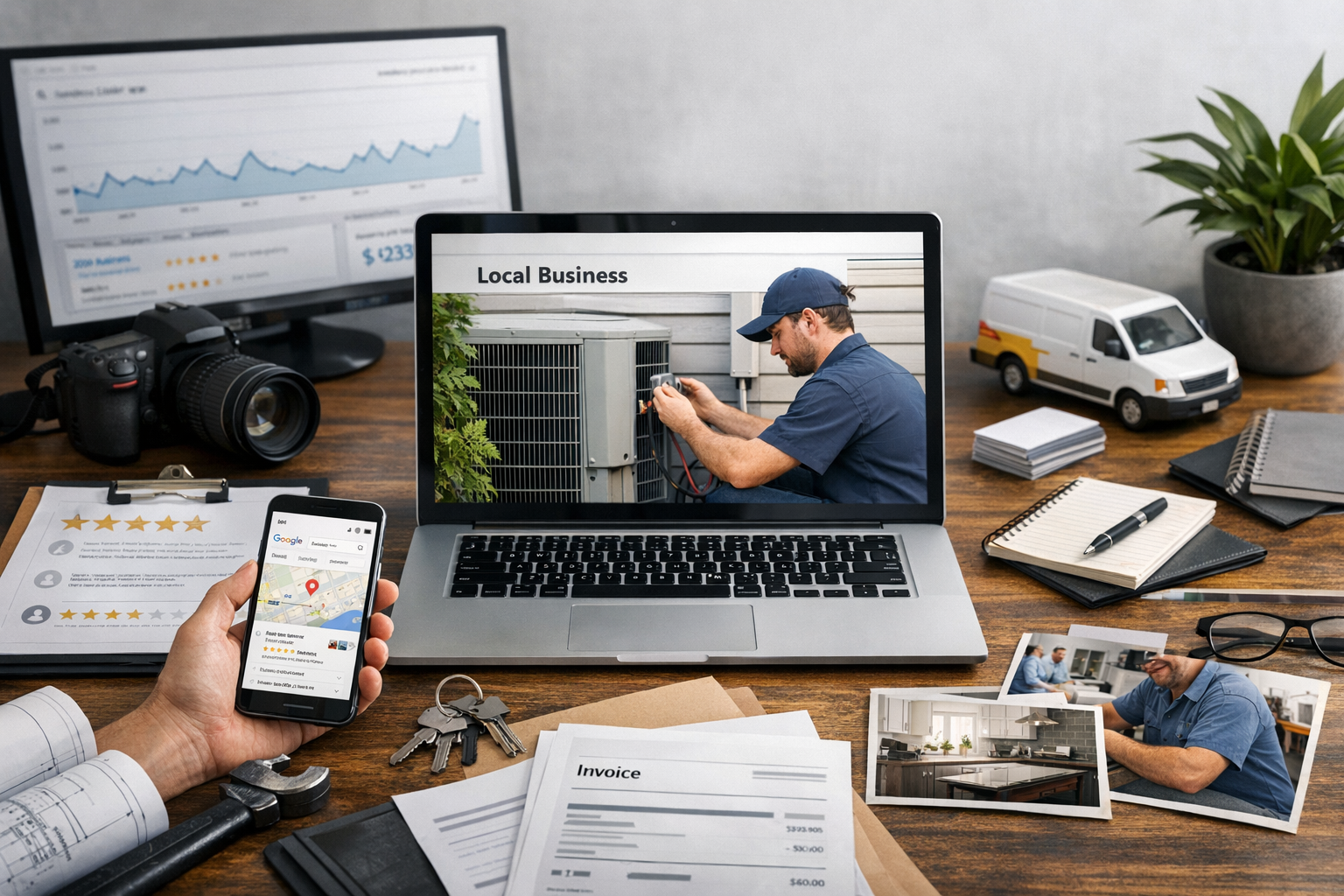
If you run a small business, trust is the whole ballgame online. Doesn’t matter if you’re a plumber, HVAC company, boutique, auto shop, clinic, contractor, or local restaurant. If people don’t trust what they see, they move on. Fast.
And that’s the part a lot of business owners miss. They think the website just needs to look decent. Maybe the Facebook page should get a few likes. Maybe the Google listing should be there somewhere. But trust online doesn’t come from one thing. It comes from a bunch of small signals lining up the right way.
Most customers are skimming. They’re checking your website on a phone between jobs, at lunch, or after hours. They’re comparing you to two or three other businesses. Sometimes they never even call the first place they find. They hop around until one company feels right.
That feeling matters more than people admit.
Your website has to look alive, not abandoned
I’ve seen plenty of businesses with a decent name, good reputation in town, and a website that looks like it hasn’t been touched since 2016. Old photos. Broken buttons. A homepage that takes forever to load on mobile. Maybe the hours are wrong. Maybe the contact form doesn’t even work.
That kind of stuff kills trust.
Most business owners are too busy doing the actual work to keep up with website updates. I get it. But customers don’t know that. They just land on the page and make a judgment in a few seconds. If it feels outdated, they assume the business is behind in other ways too.
If someone is searching for a web designer near me, they’re usually not just looking for pretty design. They want something that feels current, loads fast, and makes it easy to call or request a quote. Same thing for an SEO company near me. They’re not shopping for jargon. They want more leads.
For local service businesses in Florence, AL, Muscle Shoals, AL, Sheffield, AL, and Tuscumbia, AL, a slow or broken mobile website can quietly cost a lot of jobs. People will not sit around waiting. They’ll just tap back and call the next guy.
Google Business Profile is not optional
If you’re not showing up well on Google Maps, you’re making life harder than it needs to be.
A lot of local companies still treat Google Business Profile like a side note. They claim the listing, maybe upload a logo, then forget it exists. Meanwhile, customers are searching for local SEO near me, checking reviews, looking at photos, comparing hours, and deciding who looks most real.
That profile is one of the first trust checks people do.
Keep the business name, address, phone number, hours, and categories accurate. Add real photos. Not stock photos. Real photos from actual jobs, the storefront, the team, the truck, the waiting room, the kitchen, the job site. That stuff matters. A lot.
And reviews? Those matter even more.
Not because you need a perfect 5.0. Nobody believes that anyway. But because review patterns tell a story. A steady stream of honest reviews with real responses from the owner says a lot. It says the business is active. It says they care. It says if there’s a problem, somebody will pick up the phone.
People trust consistency more than hype
One thing I’ve noticed over the years is that small businesses often hurt themselves with inconsistent branding. Different logos on the truck, website, invoice, and Facebook page. Three shades of blue. A phone number on one page and a different one somewhere else. It sounds minor. It isn’t.
Customers notice when things don’t match. Even if they don’t know why, it makes the business feel a little shaky.
That’s especially true for contractors, industrial service companies, construction businesses, and home service companies trying to compete against bigger regional outfits. Big companies usually look polished. They don’t always do a better job, but they look buttoned up. Smaller businesses can absolutely compete, but they need to look organized online.
Trust grows when people see the same name, same tone, same logo, and same message everywhere. Website. Google listing. Social media. Email signature. Invoices. Signs on the truck. It doesn’t need to be fancy. It just needs to be steady.
Your content should sound like a real business, not a marketing department
Here’s where a lot of sites go off the rails. They try too hard.
They fill the homepage with vague talk about “solutions” and “innovative services” and “customer-focused results.” Nobody talks like that in real life. Customers know it’s fluff. They want straight answers. What do you do? Who do you serve? How fast can you help? What does the process look like?
Good content builds trust because it answers the questions people are already asking.
For example, a roofing company in Jackson, TN doesn’t need to sound like a national chain. They need to sound like a local crew that knows the area, knows the weather, knows the problems homeowners actually face, and can explain what happens next if someone calls.
Same with local restaurants, boutiques, medical clinics, and automotive shops. Your website content should feel like it was written by someone who knows the business from the inside. Not by someone guessing from a keyword list.
That’s where content marketing helps. Not in a big glossy way. Just practical stuff. Service pages that make sense. FAQs that answer real concerns. Short blog posts about common issues. Helpful updates. A few project photos with context. Enough to show people you’re active and know your trade.
Social media helps, but it can’t carry the whole load
I’ve seen a lot of small businesses around Florence and Jackson still rely almost entirely on Facebook, and that becomes a problem the second engagement drops.
Facebook is useful. No argument there. But it’s rented space. The platform changes. Reach goes down. Ads get more expensive. Posts disappear fast. If your whole online presence lives there, you’re exposed.
That’s why businesses need a real website and a Google presence first, then social media on top of that. Not the other way around.
Social works best when it supports trust. Job photos. Before-and-after shots. Team updates. Customer questions. Seasonal reminders. Local events. The kind of stuff that makes people feel familiar with your business before they ever pick up the phone.
It doesn’t have to be perfect. Honestly, perfect can feel fake. People want to see that a real company is behind the account.
Paid ads can get attention, but they won’t fix a weak foundation
Every so often I talk to a business owner who says they’ve spent money on ads and didn’t get much back. Usually the problem isn’t the ad alone. It’s what the ad sent people to.
If the landing page is weak, slow, unclear, or missing trust signals, the clicks don’t turn into calls.
That’s a painful lesson, especially for local businesses trying to stretch every dollar. HVAC companies, plumbers, electricians, landscapers, and medical clinics in particular can burn through ad money pretty quickly if the website isn’t set up to convert.
People need a reason to believe you’re the right choice. Reviews help. Clear service details help. Real photos help. A simple call button helps. A well-written page helps. So does a clean mobile layout that doesn’t fight the user every step of the way.
Ads can absolutely work. But they work best when the rest of the online presence already feels trustworthy.
Email still matters more than most people think
Email marketing gets ignored a lot by small businesses. That’s a mistake.
You do not need to send out a long newsletter every week. Nobody wants that from a local company anyway. But a short, useful email every now and then can keep your name in front of customers who already know you.
Think appointment reminders, seasonal maintenance tips, service updates, special offers, or simple check-ins. A landscaping company can remind customers about spring cleanup. An auto shop can talk about tire checks before winter. A local clinic can share new hours or new services. A boutique can highlight new arrivals without sounding pushy.
Email builds trust because it keeps the relationship warm. You’re not chasing strangers every time. You’re staying in touch with people who already bought from you once.
A real local example
I worked with a local service business not long ago that had plenty of word-of-mouth referrals. Good people. Solid work. Busy schedule. But their website was outdated, the mobile version was rough, and their Google Business Profile barely had any photos. They were getting traffic, but the phones weren’t ringing like they should.
That’s a frustrating spot to be in. You can see the visitors. You can see the clicks. But the leads just aren’t there.
Once we cleaned up the site, tightened the messaging, fixed the mobile experience, and made the Google profile feel more active, the difference showed up pretty quickly. Not because we magically invented demand. The demand was already there. We just removed the things that were getting in the way.
That happens more often than people realize. Most business owners don’t notice how many leads they’re losing from an outdated website until somebody finally shows them the numbers.
What trust looks like in the real world
Trust online isn’t one big dramatic thing. It’s smaller than that.
It’s a website that loads fast on a phone.
It’s a Google listing with current hours and reviews.
It’s photos that look real.
It’s a business name that matches everywhere.
It’s a Facebook page that doesn’t look abandoned.
It’s a contact form that works.
It’s a call answered by a human or at least returned quickly.
It’s a website that explains what the company actually does without making people work for it.
And sometimes, it’s just not looking sloppy.
That alone puts you ahead of more competitors than you’d think.
Actionable takeaways you can use right now
If you want to build more trust online this month, start here:
Check your website on a phone and make sure it loads quickly, looks current, and makes it easy to call or request service.
Review your Google Business Profile and update hours, photos, service areas, and categories.
Ask for reviews from real customers, then respond to them like a person.
Make sure your branding matches across your website, Google listing, social media, trucks, signs, and printed materials.
Cut the fluff from your website copy and speak plainly about what you do, who you help, and how people can get started.
Post real photos and honest updates instead of stock images and generic filler.
Stop sending paid traffic to weak pages. Fix the landing page first.
If your website gets traffic but no calls, that’s a sign something in the trust chain is broken.
Bottom Line
People don’t buy from the most polished business every time. They buy from the one that feels reliable.
That’s good news for small businesses. You don’t need a giant budget to build trust online. You need a clean website, a strong Google presence, consistent branding, honest content, and a few signs that a real business is behind the screen.
For local companies in Florence, AL, Muscle Shoals, AL, Sheffield, AL, Tuscumbia, AL, The Shoals, and Jackson, TN, that kind of setup can make a real difference. Especially if you’re competing against bigger companies, older brands, or neighbors who are still stuck relying on Facebook alone.
Get the basics right. Keep showing up. Make it easy for people to believe in you before they ever pick up the phone.
That’s where trust starts.
Brian JR Williamson
Managing Member
Lime Group, LLC
Web Design • SEO • Content Strategy • Online Marketing
(256) 443-2714 | (731) 215-5449
Serving Florence, AL • The Shoals • Jackson, TN
jr@limegroupllc.com
www.limegroupllc.com
