
How to Build Trust Online for Your Business
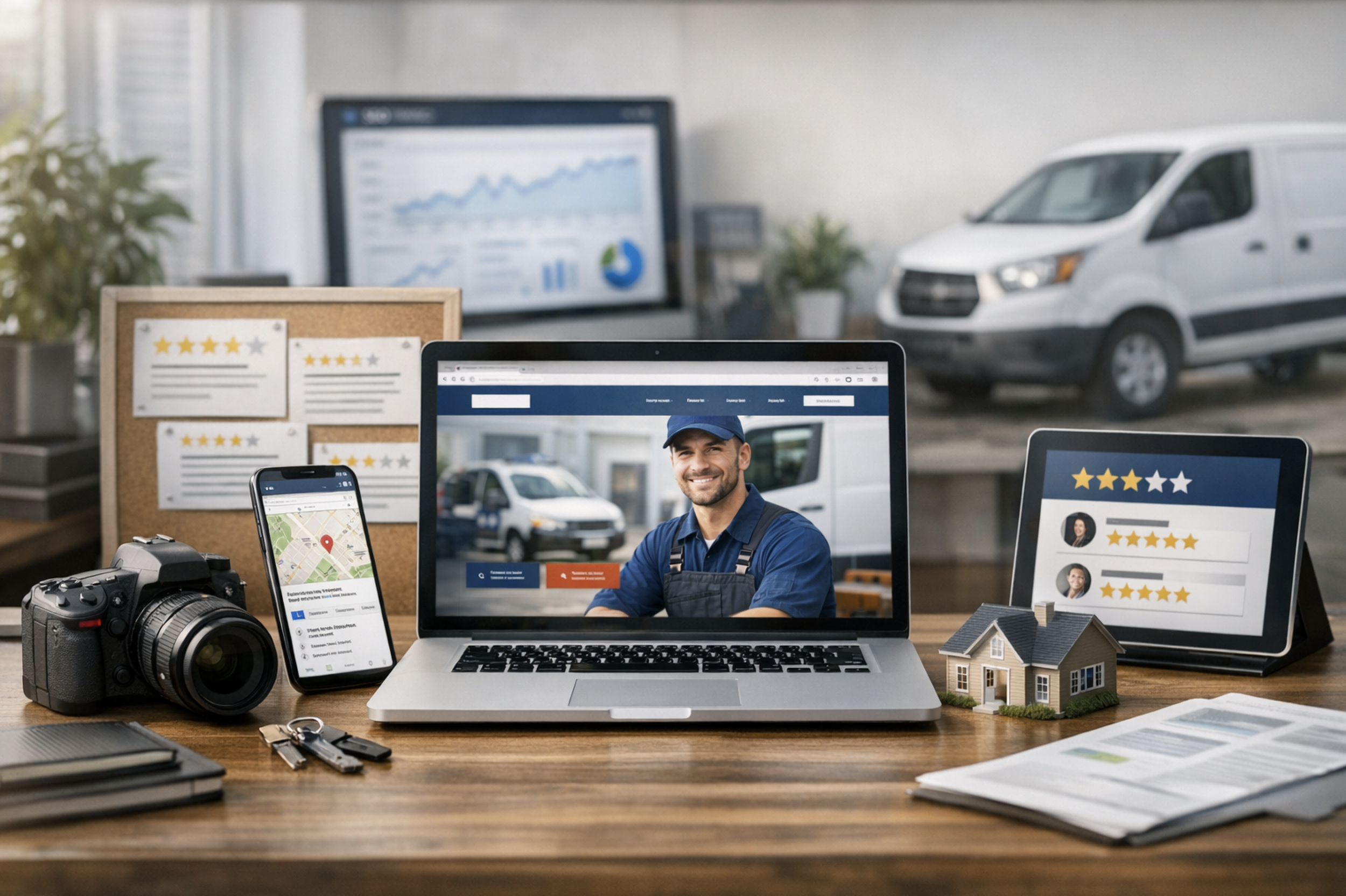
Trust is still the whole game.
A nice website helps. So does a decent Facebook page. Good photos matter. But if people don’t trust your business, none of it really moves the needle.
I’ve seen this over and over with local companies. HVAC shops. Plumbers. Electricians. Restaurants. Boutiques. Medical clinics. Construction crews. A business can have solid work, fair prices, and years of experience, but if the online presence feels sloppy, outdated, or thin, people hesitate. They move on. Sometimes they never call at all.
That’s the part a lot of owners don’t see right away. They know word of mouth works. They know neighbors recommend them. But online, people are judging fast. A website that loads slow on a phone, a Facebook page with old posts from last year, a Google listing with no photos, no reviews, and the wrong hours... that stuff adds up. Quietly. And it costs leads.
Why trust online matters more than ever
Years ago, a business could get by with a truck, a sign, and a good reputation around town. That still matters, of course. But now people check you out before they ever call. They search your name. They compare you to two or three others. They scan reviews. They look at your photos. They want to know if you’re real, active, and worth their time.
That’s true in Florence, AL just like it is in Muscle Shoals, Sheffield, Tuscumbia, and across The Shoals. It’s true in Jackson, TN too. Folks are busy. They don’t want to gamble on a company that looks neglected online.
And let’s be honest, a lot of local businesses are stretched thin. Owners are running jobs, handling payroll, dealing with customers, ordering supplies, and trying to keep the lights on. Updating the website falls to the bottom of the list. I get it. But that silence online can make a good business look out of date or worse, out of business.
Your website has to look alive
This is where trust starts for a lot of people. Not on social media. Not in a paid ad. On your website.
If your site still shows old team photos, a service area you stopped covering two years ago, or a homepage that hasn’t changed since the Obama administration, people notice. Maybe not consciously, but they feel it. A stale site makes a business look like it’s not paying attention.
For a local plumber or HVAC company, that’s a problem. For a medical clinic, it’s even bigger. For a restaurant, nobody wants to wonder if the menu is current or if the hours are real. For an auto shop or landscaping company, a broken mobile site can kill the lead before it starts.
Most business owners don’t realize how many leads they’re losing from an outdated website until someone finally shows them the numbers. Traffic is there. Calls aren’t. That usually means the site isn’t doing its job.
A trustworthy site doesn’t have to be fancy. It just needs to be clear, fast, and current. People should know what you do, where you work, how to reach you, and why they should care. Simple stuff. But it’s surprising how many sites miss the basics.
Local SEO is really about being found and being believable
If your business doesn’t show up on Google, it’s hard to build trust because a lot of customers assume you’re not active, not established, or not worth checking out. Harsh, but that’s real life now.
Good local SEO is more than ranking for a phrase. It’s making sure your business shows up in the right places with the right details. Clean business name. Correct address. Good categories. Service pages that actually explain what you do. Photos. Hours. Reviews. Location signals. All of it.
That’s especially important for businesses trying to compete against bigger regional companies. A local roofer in The Shoals doesn’t always have the same ad budget as a company out of Birmingham or Nashville. But they can still win trust by being more specific, more local, and more useful.
People searching web designer near me, SEO company near me, website help near me, marketing agency near me, or local SEO near me aren’t just shopping for a service. They’re looking for proof that the business they hire will actually answer the phone, show up, and do the work.
Google Business Profile matters more than people think
Your Google Business Profile is often the first thing people see. Not your homepage. Not your ad. That little map listing with reviews, hours, photos, and updates.
And a lot of businesses leave it half-finished or untouched.
I’ve seen companies in Florence, AL and Jackson, TN with good reputations offline but a Google profile that looks abandoned. Wrong hours. No recent photos. No services listed. Maybe three reviews, all old. That’s not helping anybody.
If you want trust, keep that profile clean. Add recent photos of your crew, your storefront, your work, your food, your products, whatever fits. Ask for reviews after a job well done. Reply to them. Even the short replies matter. They show there’s a real person there paying attention.
Reviews are not decoration
Reviews are social proof, sure. But more than that, they answer the question people are already asking in their heads: Can I trust these folks?
A handful of honest reviews with real detail beats fifty fake-looking one-liners. People can spot nonsense. They know when a review was probably written by someone’s cousin. Better to have a steady stream of genuine feedback from real customers than some weird pile of fluff.
For home service businesses, reviews are huge. Same with clinics, restaurants, and automotive shops. Nobody wants to be the first customer rolling the dice. If your competitors have ten times the reviews you do, that gap matters.
And don’t ignore bad reviews. That’s part of the trust picture too. A calm, professional response says a lot. Sometimes more than the review itself.
Branding has to match across the board
This one gets overlooked a lot.
Your website says one thing. Your Facebook page says another. Your Google listing uses an old logo. Your trucks have a different color scheme. Your email signature is from a free account. Suddenly the whole thing feels pieced together.
That kind of inconsistency makes people uneasy, even if they can’t explain why.
I’ve worked with businesses that were doing decent work but looked three different ways online. One version on the website. Another on social media. Another on printed flyers. It sends the wrong message. If the brand looks messy, people assume the operation might be messy too.
You don’t need a giant branding overhaul. You just need consistency. Same business name. Same colors. Same tone. Same service descriptions. Same contact info. Keep it simple and keep it aligned.
Social media helps, but it can’t carry the load alone
A lot of small businesses around Florence and Jackson still rely almost entirely on Facebook, and that becomes a problem the second engagement drops.
Facebook is fine for staying visible. It’s useful for updates, jobs, new menu items, sales, behind-the-scenes posts, and community stuff. But it’s rented land. The platform changes. Reach changes. One week your posts do okay, the next week they disappear into the void.
If that’s the only place your business lives online, you’re exposed.
Social media should support the website, not replace it. Your site is where trust gets built in a more stable way. It’s where your services are explained. It’s where people can read about you without getting distracted by videos, comments, and random posts about politics or somebody’s chicken dinner.
And yes, this applies to boutiques, restaurants, farms, industrial service companies, and all the rest. Social media can bring attention. The website closes the loop.
Paid ads won’t fix a weak presence
Too many businesses spend money on ads before they’ve cleaned up the basics.
That’s usually a mistake.
If your site is slow, confusing, or untrustworthy, paid traffic just magnifies the problem. You pay for clicks. People land on the site. Then they leave. That’s not growth. That’s just expensive disappointment.
I’ve seen owners burn through ad budgets with almost nothing to show for it. Not because ads don’t work, but because the landing spot wasn’t ready. A good ad can get attention. A trustworthy site turns that attention into a call, form fill, or visit.
Before spending more on ads, look at the basics. Is your messaging clear? Are your service pages helpful? Does the page work well on a phone? Are the contact buttons easy to find? If not, fix that first.
Email marketing still builds trust the old-fashioned way
Email isn’t flashy. That’s part of why it works.
If someone already knows your business, a simple email can keep you in front of them without yelling for attention. Seasonal reminders. Maintenance tips. New products. Special offers. Project updates. That kind of thing.
For a landscaping company, that might mean spring and fall reminders. For an HVAC company, filter changes and tune-up notices. For a local restaurant, weekly specials. For a boutique, new arrivals or holiday hours. For a construction company, a short update on a recent project and what’s coming next.
Good email marketing feels helpful, not pushy. It reminds people you’re still here and still paying attention.
A real local example
I worked with a local service business not long ago that had a decent reputation offline but almost no trust online. They were busy. Phone calls were coming in from referrals. But their website was old, their mobile version was rough, and their Google Business Profile barely had any photos.
They also had a Facebook page they hadn’t touched in months. Their name showed up in search, but not in a way that helped them. A few pages were missing. The main service descriptions were thin. And the site looked like it had been built in a hurry by someone who didn’t really understand the business.
People were landing on the site and leaving. Not because the company was bad. Because the site didn’t build confidence.
We cleaned up the structure, fixed the mobile issues, improved the local SEO, added real service content, updated the Google profile, and got the brand looking like one company instead of a patchwork of old pieces. Calls picked up. Not magic. Just trust, finally showing up online the way it should have from the beginning.
Actionable takeaways you can use right away
Start with your phone. Pull up your website and Google listing like a customer would. If it’s slow, awkward, or confusing, that’s your first red flag.
Check your basic info everywhere. Website, Facebook, Google, directory listings. Same name. Same phone. Same hours. Same service area.
Add fresh photos. Real ones. Your team, your trucks, your storefront, your work. People trust what feels real.
Ask for reviews after good jobs. Don’t wait weeks. Don’t make it complicated.
Fix the homepage. Tell people exactly what you do and who you help. No fluff. No vague slogans.
Make contact easy. One click should get someone to call, text, or fill out a form.
Look at your content. If your site has no useful pages for the services you actually sell, that’s a problem. A good website should answer basic questions before a customer ever has to ask.
And if your online presence feels scattered, get help before you waste more time and money trying to patch it together.
Bottom line
Building trust online isn’t about looking impressive. It’s about looking reliable.
That’s what local customers want. A business that shows up, answers the phone, keeps its info current, and seems like it still cares. That can be the difference between a lead and a lost opportunity.
If you’re in Florence, AL, Muscle Shoals, Sheffield, Tuscumbia, The Shoals, or Jackson, TN, this stuff matters just as much as it does anywhere else. Maybe more. Local buyers still want local businesses. They just want proof before they call.
So if your website is outdated, your Google profile is weak, or your social pages are carrying more weight than they should, start there. Clean it up. Tighten it up. Make the business look like the business it really is.
That’s where trust starts. And once trust is there, the rest gets a whole lot easier.
Brian JR Williamson
Managing Member
Lime Group, LLC
Web Design • SEO • Content Strategy • Online Marketing
(256) 443-2714 | (731) 215-5449
Serving Florence, AL • The Shoals • Jackson, TN
jr@limegroupllc.com
www.limegroupllc.com
