
What Local Customers Look for Before Calling
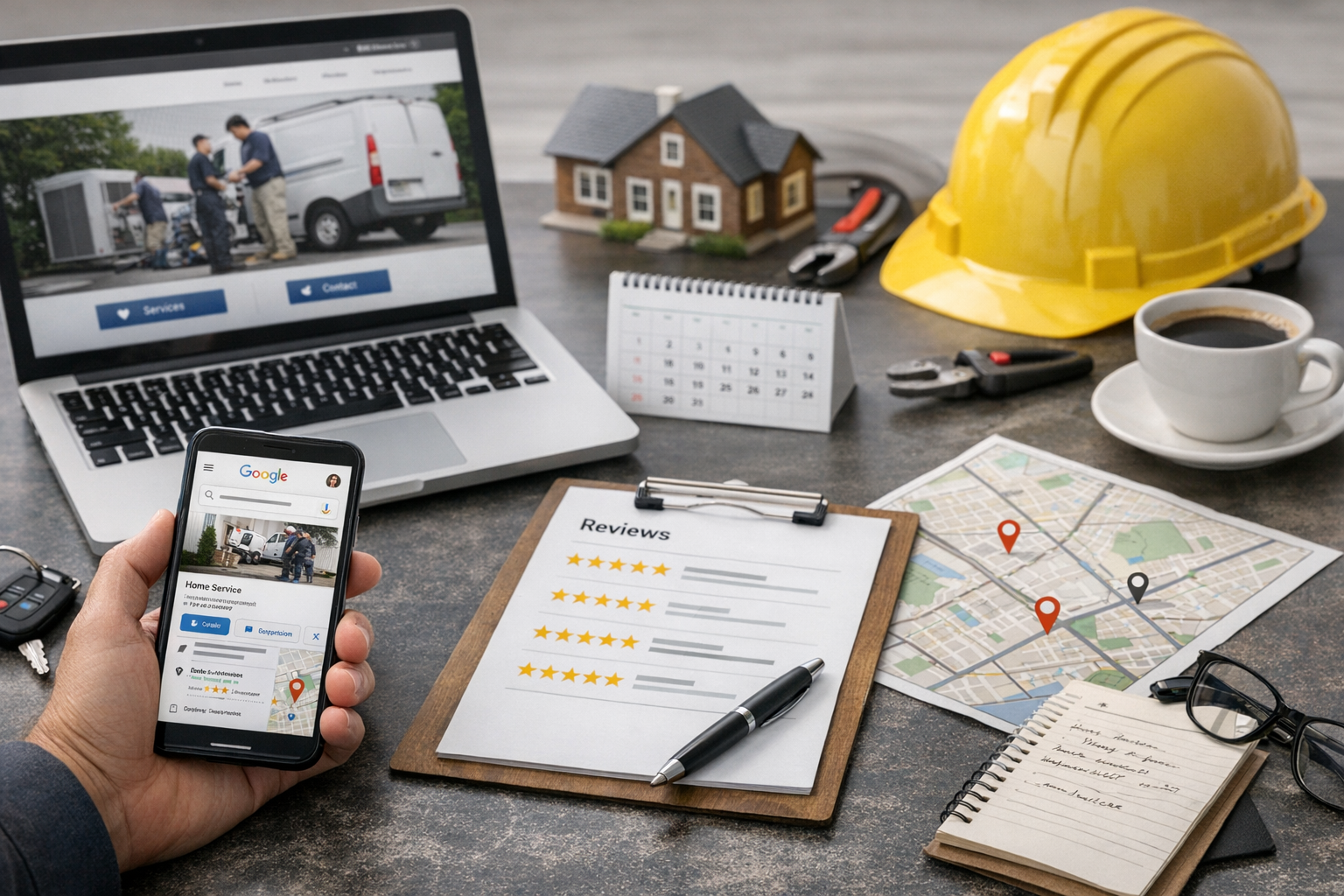
Before a local customer picks up the phone, they usually do a quick scan. Nothing fancy. They’re checking whether your business looks real, looks current, and looks like you actually handle this kind of work every day.
That’s the part a lot of owners miss. They think people are calling because they need an HVAC repair, a plumber, an electrician, a lunch spot, a clinic visit, or a set of tires. Sure. But they’re also checking for trust. Fast. Sometimes in less than a minute.
I’ve seen this over and over with businesses in Florence, AL, Muscle Shoals, AL, Sheffield, AL, Tuscumbia, AL, and across The Shoals. Same story in Jackson, TN too. A company can have solid work, good people, and a long list of happy customers, but if the online first impression is weak, the call never happens.
People want proof you’re worth calling
Local customers are not sitting around studying marketing. They’re usually busy, maybe frustrated, and looking for a quick answer. They want to know a few basic things.
Can you do the job they need? Are you close enough? Do you seem busy and established, or does this website look like it was last touched in 2017? Can they trust you with their home, their money, or their time?
That’s why outdated websites lose leads. A site that loads slow on mobile, has broken pages, old photos, or no clear call to action quietly pushes people away. Nobody emails you to say, “Hey, I almost called, but your homepage looked abandoned.” They just move on.
And yes, that happens a lot. Especially with home service businesses, construction companies, medical clinics, local restaurants, boutiques, automotive shops, and industrial service companies. If the website feels off, even a little, people start looking at the next option.
They check Google first, not your business card
Most customers don’t start with a phone book, and they’re not asking three neighbors for every little thing anymore. They’re searching Google. If you don’t show up, or if your listing looks weak, that hurts.
For a plumber, electrician, landscaper, or HVAC company, local SEO matters because people want someone near them. Not a company two counties away. Not a big regional outfit with a polished ad budget. They want someone who can actually come out soon and knows the area.
That’s where Google Business Profile optimization comes in. Your hours, service area, photos, reviews, categories, and contact info all matter. A lot. A business can pay for ads, post on social media, and still lose leads if the Google listing is a mess.
I’ve worked with owners who were spending money on ads while their Google profile had wrong hours, no recent photos, and a phone number that didn’t match the website. That kind of thing burns cash.
They look for signs you’re active
Customers want to feel like you’re open for business. Not just technically open. Actually active.
That means recent reviews. Real photos. A website that works on a phone. A Facebook page that doesn’t look abandoned. A few posts here and there can help, but only if they don’t tell the wrong story. A business relying only on Facebook gets stuck fast when engagement drops, and it drops more often than owners expect.
Some local businesses around Florence and Jackson still lean hard on Facebook because it feels familiar. I get it. It’s easy to post on there. But Facebook isn’t a website. It’s not a search engine. And it’s not where many customers make their final decision.
If your site is weak and your socials are quiet, people notice. If your branding changes from one place to another, they notice that too. Different logo colors on the website, a different phone number on Google, and older photos on Facebook all create doubt. Small doubt, maybe. But enough to stop a call.
They want fast answers without digging around
Customers are busy. They don’t want to hunt for the basics.
If someone is trying to book an appointment with a medical clinic, get a quote from a construction company, or ask about service for a broken AC unit, they want the phone number front and center. They want service areas. They want hours. They want to know if you handle emergency calls, same-day work, or certain brands or equipment.
If they can’t find that quickly, they go somewhere else.
This sounds simple, but it’s where a lot of small business websites fall apart. Owners are too busy running jobs, serving customers, and putting out fires to update the site. So the website becomes a brochure from years ago instead of a tool that brings in work.
That’s why website design matters. Not just for looks, but for function. A good local website should make it easy to call, request service, or ask a question. If the mobile version is clunky, half the visitors won’t stick around long enough to care how good your work is.
They read reviews like they’re checking the weather
People trust reviews because they sound like real experience from real customers. And they know one or two bad reviews don’t mean much. What they’re watching for is the pattern.
Do you respond? Do customers mention quality, timeliness, and professionalism? Or is the review section full of complaints about missed calls, no-shows, poor communication, and messy follow-up?
For local service companies, a few strong reviews can do more than a dozen social posts. Same goes for restaurants, boutiques, and auto shops. If people in The Shoals or Jackson, TN see that others had a good experience, the call gets easier.
On the flip side, bad SEO work from cheap agencies can really hurt here. Sometimes a company gets promised more traffic, more leads, more everything. Then the agency stuffs the site with awkward content, creates junk pages, or builds links that don’t help. The owner sees clicks, but not calls. That’s a bad trade.
They want to know you’re the right fit
Local customers don’t always choose the biggest name. They choose the one that feels right.
A boutique may not need to look like a national chain. A farm-related business doesn’t need a slick corporate website. An industrial service company doesn’t need trendy graphics. But every one of them needs a clear message.
What do you do? Who do you serve? Why should someone call you instead of the competitor down the road?
That’s branding, plain and simple. Not logo obsession. Not fancy color theory. Just a consistent story across your website, Google profile, social media, email marketing, and ads. If your message changes every time somebody sees you, the business feels scattered.
And scattered businesses struggle online. People notice when the branding is inconsistent. They may not say it out loud, but they feel it.
A real local example
I worked with a local home service company that had decent traffic coming to the website but very few calls. On paper, things looked fine. The site got visitors. The owner figured people just weren’t ready to buy.
But the problem was obvious once we looked closer. The mobile site was slow. The phone number wasn’t easy to tap. The service area wasn’t clear. Reviews were buried. The Google Business Profile was incomplete. And the homepage read like it was written for a state-wide audience instead of the actual towns they served.
We cleaned that up. Tightened the message. Made the contact info easy to find. Added better local content. Improved the Google profile. Nothing flashy.
Calls started coming in more steadily.
That’s a common story. Not magic. Just making it easier for people to trust you and reach you.
What local customers are really checking before they call
Here’s the short version.
They want to know you’re real. They want to know you’re local. They want to know you can help them without wasting their time.
If they’re searching for an SEO company near me, web designer near me, website help near me, marketing agency near me, or local SEO near me, they’re usually not comparing twenty providers. They’re narrowing it down fast. The business that looks active, trusted, and easy to contact usually wins.
That’s why website performance matters. That’s why local SEO matters. That’s why your Google Business Profile matters. And yes, why content marketing still matters too. Not because it sounds good in a meeting, but because it helps people feel comfortable enough to call.
Actionable takeaways
Start with the basics. Fix the phone number. Check the mobile version of your site. Make sure your hours are right. Add recent photos. Update your service area. Ask for reviews. Respond to them.
If your website has traffic but no calls, don’t just buy more ads and hope for the best. Look at the actual path a customer takes. If the site is slow, confusing, or outdated, more traffic just means more missed chances.
And if you’ve been meaning to update your site for months, you’re not alone. A lot of owners are too busy to mess with it. That’s normal. But it’s also why so many local businesses lose ground to bigger regional companies that stay more visible online.
Sometimes the fix is a better homepage. Sometimes it’s local SEO. Sometimes it’s cleaning up a messy Google profile or rebuilding a site that never worked well on mobile. Sometimes it’s all of it.
Don’t ignore email marketing either. For restaurants, clinics, boutiques, and service companies, a simple follow-up email can bring people back who already know you. That’s easier money than chasing strangers all the time.
Bottom Line
Local customers usually don’t need a perfect website. They just need enough confidence to make the call.
If your business looks current, shows up where people search, and makes it easy to get in touch, you’re already ahead of a lot of competitors. Especially the ones still depending on word of mouth alone or wondering why Facebook isn’t producing like it used to.
In Florence, AL, Muscle Shoals, AL, Sheffield, AL, Tuscumbia, AL, The Shoals, and Jackson, TN, the businesses getting calls are usually the ones that understand a simple truth. People look first, then they call. Give them a reason.
Brian JR Williamson
Managing Member
Lime Group, LLC
Web Design • SEO • Content Strategy • Online Marketing
(256) 443-2714 | (731) 215-5449
Serving Florence, AL • The Shoals • Jackson, TN
jr@limegroupllc.com
www.limegroupllc.com
