
Google Search Console for Beginners
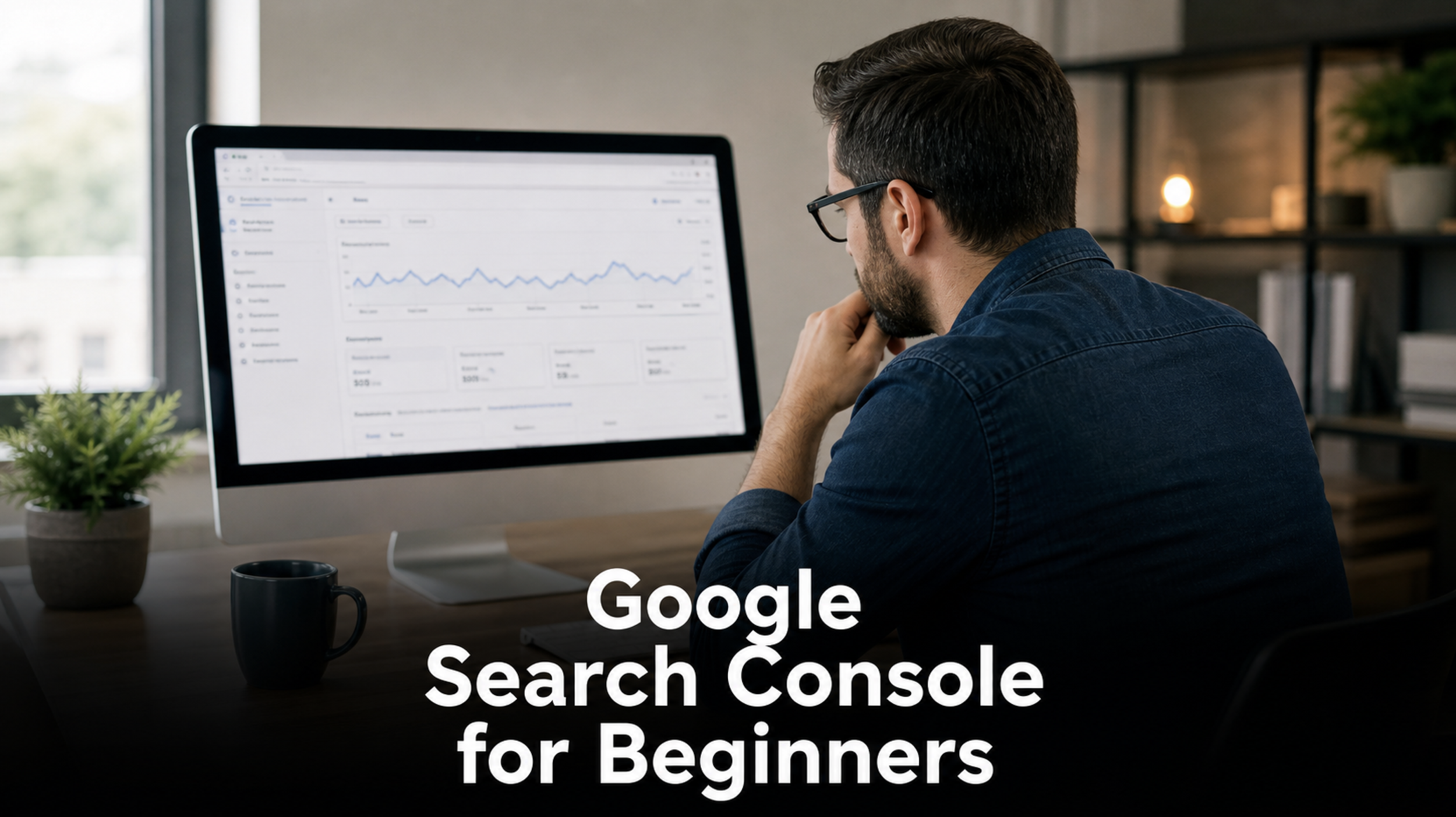
If you own a business, you’ve probably heard people talk about Google Search Console and wondered if it’s one more tech thing you’re supposed to figure out on top of everything else. I get it. Most business owners I talk to in Florence, Muscle Shoals, Sheffield, Tuscumbia, and even over in Jackson, Tennessee are already wearing too many hats. You’re running calls, talking to customers, handling invoices, maybe trying to keep up with Facebook posts, and then somebody says, “You need to check Search Console.”
Here’s the simple version: Google Search Console is one of the best free tools you can use to see how your website shows up in Google search. It won’t run your business for you, but it will tell you what Google sees, what people are searching, and where your site might be falling short. If you’ve got a website and you want more calls, more quote requests, or more people finding you without paying for every click, this matters.
I’ve spent more than 20 years working on websites, SEO, Google Ads, and local marketing, and I can tell you this: a lot of businesses waste time guessing. They pay for ads that don’t convert, they rely on Facebook alone, or they sit on outdated websites that look fine but don’t bring in business. Search Console helps take some of the guessing out of it.
What Google Search Console actually does
Google Search Console, sometimes just called GSC, is a free tool from Google that shows how your website performs in search. Think of it like a dashboard for your site’s health and visibility.
It can show you things like:
What search terms people used before clicking your site
How many times your pages showed up in Google
How often people clicked your site from search results
Which pages are doing well
Which pages have problems
Whether Google can crawl and index your site properly
That last part matters more than most folks realize. I’ve seen business owners ask why they aren’t getting traffic, and the answer was simple: Google wasn’t even indexing key pages. That’s the kind of thing Search Console can catch.
Why business owners should care
If you’re a business owner, you don’t need Search Console because it’s “techy.” You need it because it can show you whether your website is actually doing its job.
Maybe your site gets traffic but no phone calls. Maybe people in the Shoals are searching for what you do, but a competitor in town is showing up above you. Maybe you hired someone cheap years ago who built a website that looks decent but never brought in leads. Search Console can help you spot those problems.
It’s also useful if you’ve been leaning too hard on Facebook. I see that all the time. A business gets some likes, maybe a few comments, but when the reach drops, the leads dry up. Search traffic is different. People are already looking for something. That usually means they’re closer to taking action.
How to get started with Google Search Console
Getting started isn’t hard, but there are a few steps.
1. Sign in with a Google account
You’ll need a Google account to use Search Console. Most business owners already have one through Gmail or Google Workspace.
2. Add your website
You’ll add your website domain or URL prefix. Domain setup is usually better if you want a full picture of your site, but the main thing is getting it connected the right way.
3. Verify ownership
Google wants to know you actually own the site. That usually means adding a DNS record, uploading a file, or connecting through another verified platform. If that sounds annoying, yeah, sometimes it is. But you only have to do it once.
4. Wait for data
Don’t panic if the dashboard looks empty at first. It can take a little time for Google to gather data. Once it starts rolling in, you’ll begin seeing what’s happening behind the scenes.
The reports that matter most
You don’t need to stare at every report in Search Console. A few are enough to give you real value.
Performance
This is where you’ll see search queries, clicks, impressions, click-through rate, and average position. In plain English, it tells you what people searched, how often your site showed up, and how many people clicked.
This report is one of the best places to find opportunities. For example, if your site shows up for “roof repair Florence AL” or “website designer near me” but nobody clicks, that may mean your title tag or description isn’t pulling its weight. If people are searching terms you didn’t expect, that can also give you ideas for new content.
Pages
This report helps you see which pages are indexed and which ones have issues. If an important service page isn’t indexed, that’s a problem. If a page is indexed but never gets traffic, that may mean it needs better content or a clearer purpose.
Indexing
This tells you whether Google is able to include your pages in search results. Sometimes pages get blocked by accident. Sometimes a site has technical issues, old redirects, or duplicate pages floating around. It happens more than people think, especially on older websites.
Experience
Search Console can also point out problems with mobile usability and page experience. And yes, this matters. I’ve seen slow websites cost businesses real leads. People don’t wait around forever. If your site takes too long to load, they bounce and call the competitor instead.
What to look for if you’re just beginning
If you’re new to Google Search Console for beginners, don’t try to master everything in one afternoon. Start with these questions:
What are people searching before they find me?
Which pages get the most clicks?
Are there pages that should be ranking but aren’t?
Is Google indexing my important pages?
Are mobile users having trouble?
That alone can tell you a lot.
One thing I always tell business owners: traffic by itself doesn’t mean much. I’ve seen websites get visits and still produce no calls, no quote requests, and no actual business. Search Console helps you connect the dots so you can see whether the right people are finding the right pages.
A real-world example from a local business
Let’s say you run a home services company in The Shoals. Your site has a page for HVAC repair, but you’ve never really looked at Search Console. You log in and find that the page shows up for searches like “AC repair Muscle Shoals” and “furnace repair Florence AL,” but the click-through rate is low.
That tells you two things. First, Google already sees the page. Second, something about the search result isn’t convincing enough for people to click. Maybe the title is too generic. Maybe the description doesn’t explain what makes you different. Maybe the page is thin and not answering the questions customers have.
Now you’ve got something to work with. Without Search Console, you’d just be guessing.
Common mistakes I see
Search Console is simple once you get used to it, but people still make the same mistakes.
Ignoring it completely
A lot of business owners set it up and never go back. That’s like buying a truck and never checking the gas gauge.
Only looking at traffic
Traffic matters, but not all traffic is useful. You want search terms and pages that lead to real business.
Not checking indexing issues
If your best service pages aren’t indexed, you’ve got a problem no ad campaign can cover up.
Assuming the website is fine because it looks okay
I’ve seen plenty of pretty websites that don’t rank, don’t load well, and don’t convert. Looks are only part of it.
How Search Console fits into local SEO
If you’re trying to rank in Florence, Alabama, Muscle Shoals, Sheffield, Tuscumbia, or nearby, Search Console gives you clues about what local searchers are typing into Google. That matters when you’re trying to show up for “SEO company near me,” “website help near me,” or “local SEO near me.”
It can also help you spot whether your pages are matching what local customers actually want. Sometimes business owners write for themselves. Search Console helps you see how people are really searching.
That’s useful if you’re trying to beat competitors who may not be better than you, just more visible online. I’ve seen that plenty of times. A solid local company gets passed over because their website isn’t communicating clearly, while a weaker competitor ranks higher and gets the call.
What to do after you set it up
Once Search Console is connected, don’t just leave it sitting there. Check it regularly. Even once a month is better than never.
Here’s a simple routine:
Look at performance data
Check for new indexing issues
See which pages are getting clicks
Notice which search terms keep showing up
Use that info to improve pages or create new content
If you run a local business and you’re too busy to update your site, that’s normal. A lot of owners are. But if nobody is watching what Google sees, the site can slowly drift out of sync with what your customers need.
Bottom line
Google Search Console for beginners doesn’t have to be complicated. If you remember nothing else, remember this: it helps you see how Google views your site, what people are searching, and where your website might be holding you back.
If your business depends on being found online, this tool is worth your time. It can show you why a page isn’t ranking, why traffic isn’t turning into calls, or why your competitor is showing up above you. And once you know that, you can make smarter decisions instead of just hoping the website does its job.
If you’re in Florence, Muscle Shoals, Sheffield, Tuscumbia, Jackson, TN, or anywhere nearby and you need help making sense of Search Console, SEO, or your website in general, don’t overthink it. Start with the basics, look at the data, and fix the stuff that’s actually holding you back.
Brian "JR" Williamson
Founder & Marketing Director
Lime Group, LLC
Web Design • SEO • Content Strategy • Online Marketing
(256) 443-2714
(731) 215-5449
Serving Florence, AL • The Shoals • Jackson, TN
