
What Local Customers Look for Before Calling
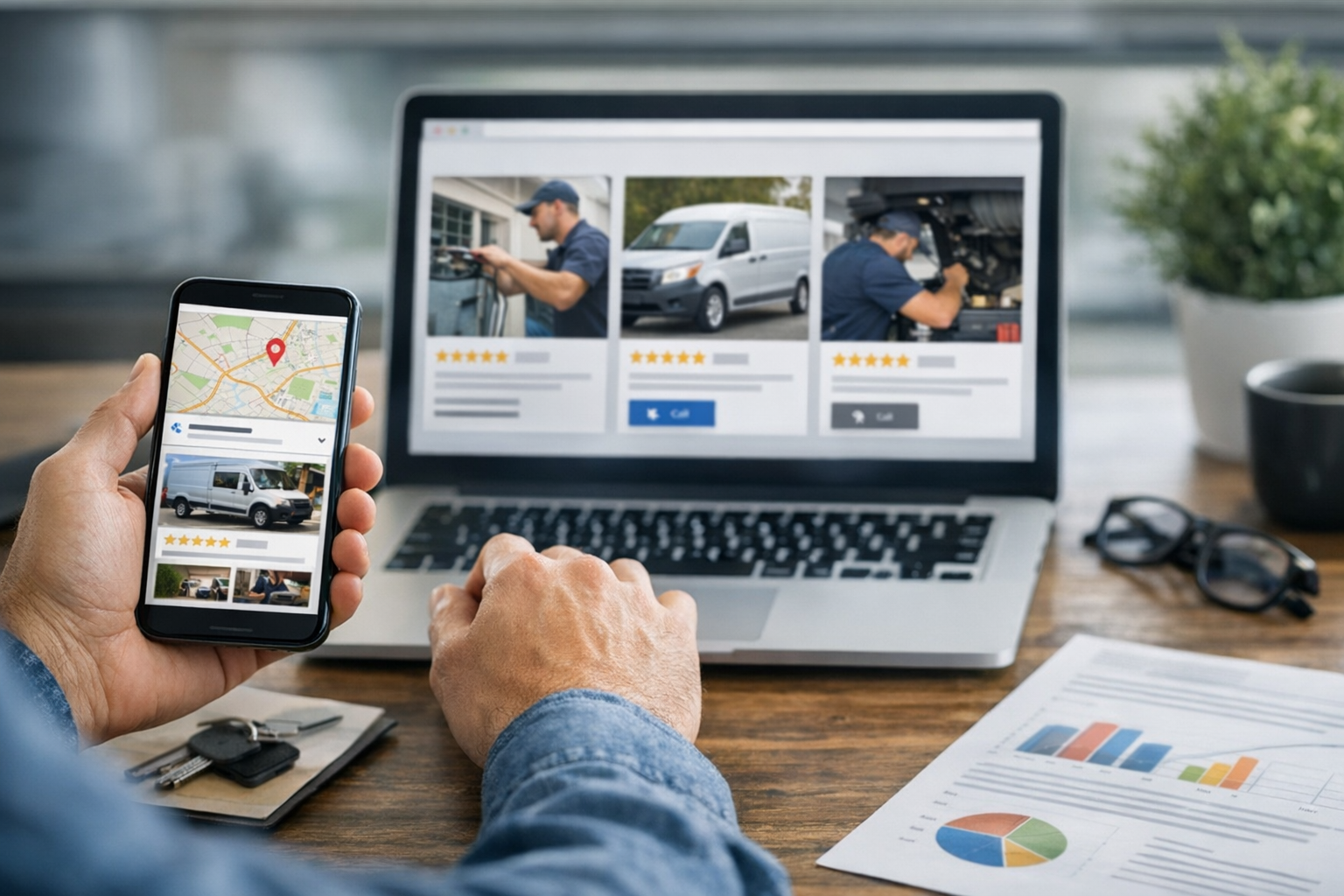
Most local customers don’t sit around studying your business like you do.
They’re in a hurry. Their sink is leaking, their AC is acting up, their shop needs a repair, their kid has an appointment, or they just need lunch and don’t want to guess wrong. So before they call, they do a quick check. A very quick check. Sometimes it’s 30 seconds on a phone while standing in a parking lot.
That’s the part a lot of business owners miss.
People aren’t looking for the fanciest website. They’re looking for signs that you’re real, you’re nearby, and you won’t waste their time. That’s it. If you run an HVAC company, plumbing business, restaurant, boutique, clinic, landscaping service, or automotive shop, the same thing happens. Customers scan, decide, and either call or move on.
And if your online presence is messy, outdated, slow, or missing entirely, they usually move on faster than you’d think.
They want to know you actually serve their area
This sounds basic, but it’s a big one. Local customers want to know if you’re in their area before they call. Not after. Before.
Someone in Florence, AL isn’t going to call a business if they can’t figure out whether it serves Florence, Muscle Shoals, Sheffield, or Tuscumbia. Same deal for someone looking for help in The Shoals or Jackson, TN. If your website and Google Business Profile don’t make that clear, you’re making them work too hard.
People don’t like work when they’re shopping for a local service. They want a quick yes.
That means your service area, city names, and basic location info should be easy to find. Not buried. Not hidden in a footer from 2018. Right there where people can see it.
They check your website for signs of life
This is where a lot of businesses get hurt.
I’ve seen plenty of companies with decent reputations offline and websites that look like nobody has touched them in years. Slow load times. Old photos. A broken mobile layout. Pages that don’t work right on a phone. That kind of thing kills calls.
And it’s not just ugly. It creates doubt.
If your website is slow or broken on mobile, a customer starts wondering what the actual service will be like. If the site still has old staff photos, outdated hours, or strange pages that don’t load, people notice. Maybe not consciously, but they notice.
Busy owners don’t always have time to update their site. I get that. A lot of contractors, shop owners, and medical practices are just trying to get through the day. But customers can tell when a website has been neglected, and they read that as neglect in the business too.
That’s a rough spot to be in.
They look for fast answers, not a sales pitch
When somebody lands on your site or Google listing, they’re usually asking a few simple questions:
Can I trust this company?
Do they do what I need?
Are they open?
How do I contact them?
That’s the whole game right there.
If they can’t find the answer fast, they won’t stick around. Nobody wants to dig through three pages just to see whether you install water heaters, take on commercial HVAC work, or do same-day tire repair.
Local customers love a simple path. Clear services. Clear phone number. Clear hours. Clear photos. Clear reviews. They’re not asking for a masterpiece. They want enough confidence to make the call.
Google reviews matter more than owners want to admit
A lot of local businesses still underestimate this.
People absolutely read reviews before calling. Not every single one, and not always with a magnifying glass. But they check. If your rating looks weak, or your reviews are old, or the reviews don’t match what you say you do, that can push a lead away.
This matters a lot for places like medical clinics, restaurants, auto repair shops, and home service companies. Same thing for boutiques and industrial service companies. If the reviews are thin, or all the feedback sounds fake, customers get suspicious.
And no, you don’t need a perfect five-star score. Real businesses don’t have that. A steady stream of honest reviews is what people trust.
The other part of this is reputation management. If you’ve got one bad review sitting there unanswered for a year, people see it. If you’ve got ten happy customers and never asked any of them to leave a review, that’s a missed opportunity.
They want proof, not promises
Before they call, customers want to know you’ve handled work like theirs before.
That could mean photos of finished projects, before-and-after shots, menu details, service lists, staff introductions, or just a good description of what you actually do. A lot of business owners skip this stuff because they think everybody already knows. They don’t.
A plumber in Florence, AL might think “water heater replacement” says enough. But a homeowner comparing three companies wants to know who shows up on time, who handles emergency calls, who works on tankless systems, and who has a real local track record.
Same with a landscaping company in Muscle Shoals or a construction company in Sheffield. People want to see the work. Not just hear about it.
That proof also helps with SEO and Google rankings. Search engines like clear, specific content, but so do human beings. Funny how that works.
They compare you to the other options in town
Local customers usually don’t call the first business they see. They compare a few.
Maybe your competitor in Tuscumbia has a better-looking website. Maybe the company in Jackson, TN shows up higher in search. Maybe the HVAC shop down the road has better reviews, even if their website isn’t fancy. Customers are doing quiet comparisons all the time.
And if your online presence looks half-finished, they’ll assume you’re behind. It might not be fair, but that’s how it goes.
This is where branding matters. Not just the logo. The whole look and feel. Your colors, photos, messaging, tone, and consistency across your website, Google Business Profile, Facebook page, and ads. If one place says one thing and another says something else, people notice the disconnect.
I’ve seen companies spend money on ads while their website still looked like a side project. That’s a tough way to buy traffic. You can pay for clicks, but you can’t pay people to trust a bad first impression.
They check whether you’re easy to reach on a phone
This one should be obvious, but plenty of sites still miss it.
Most local searches happen on mobile now. Someone is standing in a yard, in a driveway, in a break room, or waiting in line. If your site doesn’t load well on a phone, you’re losing calls. Plain and simple.
A lot of small businesses around Florence and Jackson still rely almost entirely on Facebook, and that becomes a problem the second engagement drops. Facebook is fine for updates and photos. It is not a full replacement for a real website. Not even close.
People want a tap-to-call button. They want hours. They want directions. They want to know whether you answer after 5 p.m. or if they should leave a message. If they can’t figure that out quickly, they’ll keep scrolling.
They notice whether you look active or abandoned
This is one of those things business owners don’t always think about.
If your last post is from two years ago, your website footer still shows a season that passed long ago, and your Google Business Profile has old holiday hours, the whole thing starts looking abandoned. Customers pick up on that fast.
It doesn’t mean you need to post every day. Most local businesses don’t have time for that, and honestly, they don’t need to. But a little movement helps. Recent reviews. Fresh photos. A blog post here and there. Updated hours. Current specials. Basic stuff.
That small amount of upkeep signals that somebody is paying attention.
A real local example
We worked with a local service business that had decent word-of-mouth but almost no online lead flow. Good people. Good work. Zero real website traction.
The site was outdated, slow on mobile, and hard to read. Their Google Business Profile had missing details. Their Facebook page was more active than their website, which sounds fine until you realize most people never made it to Facebook in the first place.
They were also paying for ads that sent traffic to a weak landing page. So they were basically paying to give people a bad experience.
Once the website was cleaned up, the service areas were made clear, the mobile version worked properly, and the Google profile got the attention it needed, the calls improved. Not overnight. Not magically. But steadily.
That’s usually how it goes. You fix the stuff customers notice first, and the results start to show up.
What local customers are really asking themselves
Before they call, customers are usually making a few quiet judgments:
Do these people seem legit?
Are they local or just pretending to be?
Can I find what I need fast?
Do other people trust them?
Will they answer when I call?
That’s the checklist.
If you’re a local restaurant in The Shoals, a boutique in Florence, AL, an electrician in Muscle Shoals, or a clinic in Jackson, TN, those questions shape whether somebody picks up the phone. They’re not looking for perfect marketing. They’re looking for confidence.
Actionable takeaways you can use this week
Start with the basics.
Check your website on a phone. Not just your own phone on Wi-Fi. Try it on mobile data too. If it’s slow, awkward, or hard to use, fix that first.
Look at your Google Business Profile. Are your hours right? Is your phone number correct? Are your service areas listed clearly? Do your photos still reflect your business today?
Read your homepage like a stranger. In five seconds, can someone tell what you do, where you do it, and how to contact you?
Make sure your branding is consistent across your site, social media, and listings. It doesn’t have to be fancy. It just needs to match.
Ask for reviews from real customers, not just the happy ones who happen to remember. Build a steady habit.
And if your site gets traffic but no calls, don’t assume the traffic is the problem. Sometimes the website is the problem. Sometimes the content. Sometimes the phone number is buried. Sometimes the call-to-action is weak. Sometimes the whole thing just needs a cleaner path.
If you’ve been burned by cheap SEO work before, you’re not alone. A lot of businesses have. Bad SEO work leaves behind weird pages, thin content, junk backlinks, and a site that never really had a chance. That kind of cleanup matters more than people think.
Bottom line
Local customers are not trying to be difficult. They just want quick proof that you’re worth calling.
If they can find you on Google, see that you serve their area, read a few real reviews, and get a good feeling from your website, they’ll usually call. If not, they’ll keep moving until they find somebody who makes it easy.
That’s why website performance, SEO, local SEO, Google Business Profile work, branding, content, and reputation all matter together. Not because marketing sounds nice on paper, but because real people use those signals before they reach out.
And in places like Florence, AL, Muscle Shoals, AL, Sheffield, AL, Tuscumbia, AL, The Shoals, and Jackson, TN, that first impression can decide whether you get the job or lose it to the next guy.
If your business is getting traffic but not calls, or you’re not showing up where local people search, it may be time to look at the basics again. That’s usually where the answer is hiding.
Brian JR Williamson
Managing Member
Lime Group, LLC
Web Design • SEO • Content Strategy • Online Marketing
(256) 443-2714 | (731) 215-5449
Serving Florence, AL • The Shoals • Jackson, TN
jr@limegroupllc.com
www.limegroupllc.com
