
Why Most Marketing Doesn’t Convert
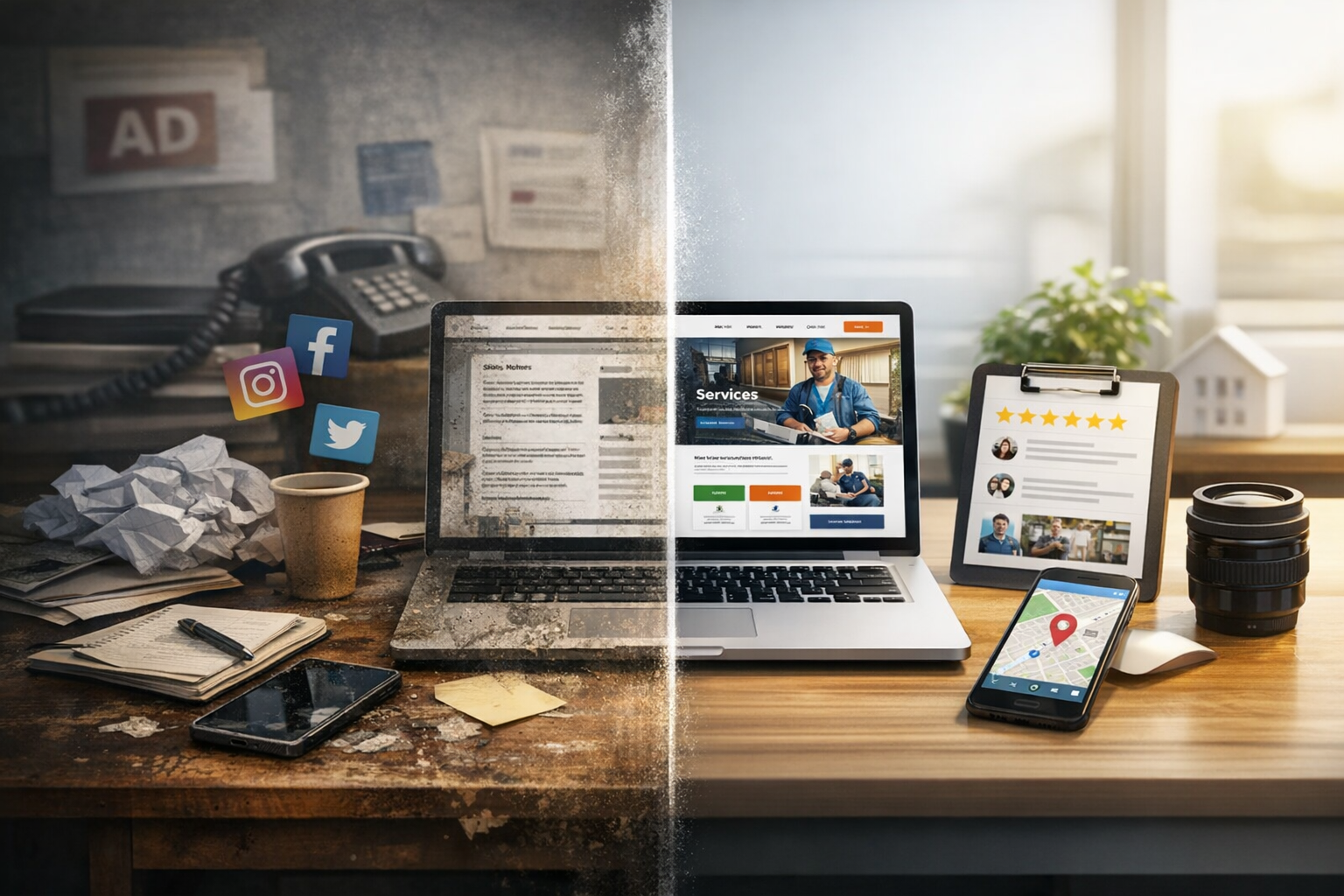
Most marketing doesn’t fail because business owners don’t care. It fails because the message, the website, and the follow-up don’t line up.
I’ve seen this more times than I can count. A company spends money on ads, posts on social media, maybe pays somebody cheap to build a site, and then sits there wondering why the phone’s still quiet. The traffic shows up. The calls don’t.
That’s the part people miss. Getting attention is not the same thing as getting business.
In places like Florence, AL, Muscle Shoals, AL, Sheffield, AL, Tuscumbia, AL, and across The Shoals, a lot of small businesses are still running on reputation and referrals. Same story in Jackson, TN. Word of mouth still matters. It always will. But once you try to grow past the people who already know you, the cracks show fast.
And if your site is slow, your Google Business Profile is half-filled out, your branding looks different everywhere, and your Facebook page is doing all the heavy lifting, conversions start to fall apart.
Traffic is not the problem most of the time
A lot of owners think they need more traffic. Sometimes they do. But more often, they need better conversion. That means the people who already found you need a clearer reason to call, text, book, or stop in.
I’ve seen HVAC companies get clicks from Google Ads and local SEO, but the website buried the phone number and never explained service areas. I’ve seen plumbers with decent rankings but a homepage that looked like it hadn’t been touched in ten years. I’ve seen restaurants with traffic coming from search and social, but no clear menu, no hours, and no easy way to order. That stuff kills momentum.
People move fast online. If they have to hunt for the basic info, they’re gone.
That’s especially true on mobile. A broken mobile website can wipe out good marketing in a hurry. If the page loads slow, the buttons don’t work right, or the text is a mess on a phone, forget it. Folks won’t sit there and wrestle with it. They’ll tap out and move on to the next contractor, shop, or clinic down the road.
Bad websites don’t just look bad. They lose money.
Plenty of local companies are running on outdated websites and don’t even realize how much business it’s costing them. The owner is busy. The crew is busy. Nobody has time to sit down and think through the website. So it stays the same for years.
Meanwhile, the competition keeps moving.
A local construction company in The Shoals might have a solid reputation offline, but if the site looks dated and doesn’t show recent projects, reviews, or service areas, the customer starts looking elsewhere. Same with an automotive shop, a medical clinic, or a landscaping business. People want proof. Not a fancy pitch. Proof.
That means real photos. Real reviews. Real service pages. Clear contact info. And a site that doesn’t feel abandoned.
I’ve also seen businesses pay for bad SEO work from cheap agencies that stuffed pages with junk text, bought trash links, and called it a strategy. Sure, the report looked busy. But rankings didn’t improve in any meaningful way, and the phone still didn’t ring. That kind of work gives SEO a bad name.
Why social media alone usually falls short
A lot of small businesses around Florence and Jackson still rely almost entirely on Facebook, and that becomes a problem the second engagement drops. One algorithm change, one slow month, one bad stretch of posts, and the whole thing feels like it vanished.
Social media can help. No question. It’s good for staying visible, showing personality, and reminding people you’re still open and active. But it’s rented ground. You don’t own the audience the way you own your website, your email list, or your Google Business Profile.
If you’re a boutique, restaurant, farm-related business, or home service company, social can support the sale. It usually doesn’t close it by itself.
That’s where a lot of businesses get stuck. They post. They boost. They hope. Then they wonder why those likes never turn into actual customers.
People don’t convert when the brand feels scattered
Inconsistent branding doesn’t get talked about enough. But it matters.
If your truck wrap says one thing, your website says another, your Facebook page has different hours, and your Google listing still shows old photos from three owners ago, people notice. Maybe not consciously. But they feel it. And when something feels off, trust drops.
That hurts local businesses more than big ones in some cases. A regional chain can survive a little confusion because people already know the name. A local electrician, plumber, chiropractor, or industrial service company doesn’t get that same forgiveness.
Your branding doesn’t have to be flashy. It just needs to match. Same tone. Same name. Same phone number. Same service area. Same story. That consistency helps people feel comfortable enough to reach out.
Google is usually where the decision starts
Most people searching for local help aren’t browsing for fun. They’ve got a problem. They want it fixed. Fast.
That’s why Google rankings, Google Business Profile optimization, and local SEO matter so much. If you don’t show up for searches like plumber near me, web designer near me, SEO company near me, website help near me, or local SEO near me, you’re handing leads to somebody else.
And not just anybody. Usually the larger regional companies with bigger budgets and better systems.
That doesn’t mean a small business can’t compete. They can. I’ve seen it happen plenty of times. But they need the basics done right. Clean website structure. Good service pages. Location signals. Reviews. Photos. Fast load times. A Google Business Profile that’s actually filled out and kept current.
That part isn’t glamorous. It’s just what works.
Why ads waste money when the back end is weak
Paid ads can be a smart move. They can also burn through cash fast if the landing page is weak or the offer is muddy.
Maybe the ad says free estimate, but the page doesn’t make it easy to request one. Maybe the ad is for emergency plumbing, but the site spends half the homepage talking about the company history instead of the service the person actually searched for. Maybe the ad brings in traffic, but the phone number is tiny and the form doesn’t work on mobile.
That’s where the money goes.
Too many owners think the ad itself is the problem. Sometimes it is. But more often, the issue is what happens after the click. If your website can’t carry the load, ads just become a more expensive way to disappoint people.
Email still works, even if nobody’s excited about it
Email marketing doesn’t get much attention from small business owners, and I get why. It sounds old-school. But it’s still one of the easiest ways to get repeat business from people who already know you.
A local restaurant can send specials. A boutique can promote seasonal inventory. An HVAC company can remind customers about tune-ups before summer hits. A clinic can stay in touch with patients. A construction company can keep past clients informed about new services.
It doesn’t have to be complicated. A simple monthly message is often enough.
The point is to stay in front of people without waiting on social media to hand you reach. Owned channels matter because they give you a second shot with folks who already showed interest.
A real local example
I worked with a local service business not long ago that had the classic setup. Good reputation. Solid work. Busy schedule. But the marketing was all over the place.
The owner was relying on referrals and Facebook. The website was outdated, slow on phones, and didn’t mention half the services they actually offered. Their Google Business Profile had old photos and a wrong service area. They were running a few ads, but the landing page barely loaded on mobile. Calls were coming in, but not enough. And the owner kept saying the same thing: we get traffic, but no calls.
Once we cleaned up the website, fixed the local SEO, improved the service pages, and tightened up the branding, things shifted. Not overnight. That’s not how it works. But the quality of leads improved. The calls made more sense. People were coming in already understanding what the business did and where they worked.
That’s the real win. Not just more visitors. Better ones.
What small business owners can actually do
If marketing isn’t converting, start with the basics. Don’t make it harder than it needs to be.
First, check your website on a phone. Not on your desk. On a phone. If it loads slow or feels clunky, fix that first.
Second, make sure your main services are easy to find. Don’t hide them behind vague wording.
Third, clean up your Google Business Profile. Accurate hours. Correct phone number. Real photos. Service areas. Reviews.
Fourth, ask if your branding matches everywhere. Website. Truck. Facebook. Google. Print. If it doesn’t, tighten it up.
Fifth, stop guessing about ads. Look at what happens after the click. If people leave without calling, the landing page needs work.
Sixth, keep posting content that answers real questions. Not just sales posts. Helpful stuff. Service breakdowns. FAQs. Project photos. Before-and-after work. That kind of content helps with SEO and gives people a reason to trust you.
Seventh, pay attention to reviews and reputation. A few recent, honest reviews can do more than a pile of polished marketing copy.
None of this is fancy. But it’s how local businesses actually grow online.
Bottom Line
Most marketing doesn’t convert because it stops short. It gets seen, but it doesn’t build trust. Or it brings people in, but the website fails them. Or the business shows up in search, but the message is too vague to move anybody to action.
If you’re in Florence, AL, Muscle Shoals, AL, Sheffield, AL, Tuscumbia, AL, Jackson, TN, or anywhere around The Shoals, you don’t need more noise. You need the right pieces working together. Website performance. SEO. Local SEO. Google rankings. Content. Branding. Online reputation. Paid ads that actually land. A site that works on mobile. A clear path for people to contact you.
That’s what turns attention into calls.
And if your business is already getting traffic but not enough leads, that’s usually a sign something simple is being missed. Usually more than one thing, honestly. Fix those pieces and the whole thing starts to breathe a little easier.
Brian JR Williamson
Managing Member
Lime Group, LLC
Web Design • SEO • Content Strategy • Online Marketing
(256) 443-2714 | (731) 215-5449
Serving Florence, AL • The Shoals • Jackson, TN
jr@limegroupllc.com
www.limegroupllc.com
