
Local SEO vs Google Ads: Which Drives Better Leads
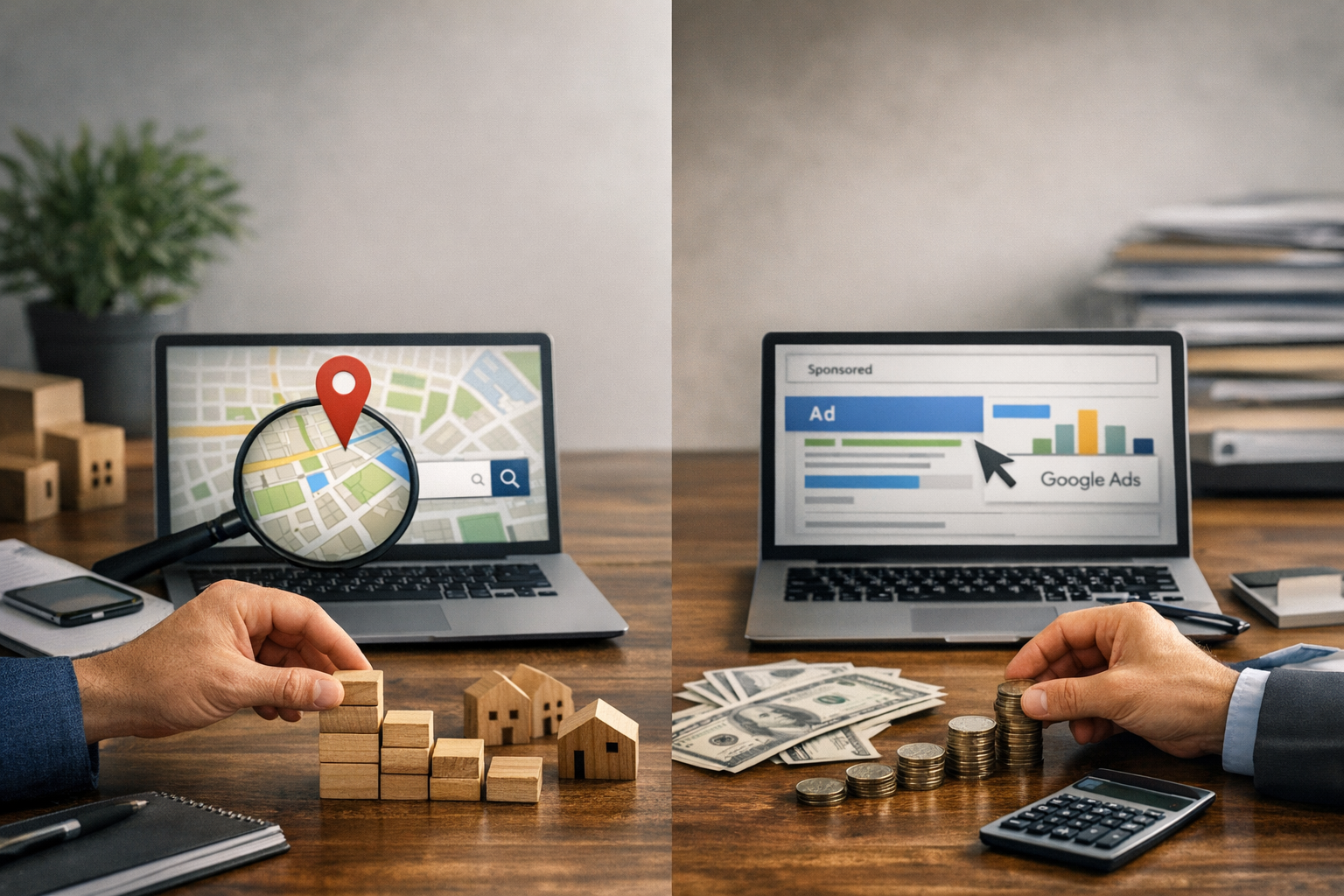
If you own a local business, you’ve probably had this question come up at least once: should I put money into local SEO or just run Google Ads and get leads right now?
I hear that a lot from contractors, shop owners, clinic managers, and service businesses across Florence, AL, Muscle Shoals, AL, Sheffield, AL, Tuscumbia, AL, and even over into Jackson, TN. Usually the answer isn’t as neat as people want it to be. Some businesses need faster lead flow. Some need a better foundation. A lot need both, but not in the same way they think.
The truth is, Google Ads can bring in calls fast. Local SEO can bring in steady leads without paying for every click. One is rented attention. The other is earned visibility. And if your website is shaky, your Google Business Profile is half-finished, or your branding is all over the place, both can underperform pretty quickly.
What Google Ads actually does well
Google Ads is good when you need traffic now. That’s the plain version.
If you’re a plumber with an opening in the schedule next week, a roofer trying to fill storm-related jobs, or an HVAC company heading into a busy season, paid search can put you in front of people who are already looking for help. That part works. No waiting months for rankings. No hoping Google figures you out eventually.
But ads only work if the back end is in decent shape. I’ve seen businesses burn through a budget because the website loads slowly on mobile, the form doesn’t work, the call button is hard to find, or the ad sends people to a homepage that says almost nothing useful. Traffic comes in. Calls don’t.
That’s a rough feeling. Especially when the owner is checking the numbers and thinking, Why am I paying for clicks if nobody’s calling?
And honestly, a lot of small businesses get sold ad campaigns before anyone bothers to look at the site itself. That’s backwards. If the site looks like it hasn’t been touched since 2017, or the mobile version is clunky, you’re not getting the full value of the ad spend.
What local SEO does better
Local SEO takes longer, but it tends to build better staying power.
For a local service company, that usually means showing up in Google Maps, showing up for searches tied to your city, and building enough trust that people click your listing instead of the bigger regional company with the heavier ad budget.
That’s a real advantage for businesses in places like The Shoals and Jackson, TN. You don’t always need to outrank some giant company in Birmingham or Memphis. You need to show up when somebody searches for an electrician near me, a medical clinic in town, a local restaurant open now, or website help near me because they’ve finally decided their current site is costing them business.
Local SEO works well for businesses that want steady leads over time. It helps when your Google Business Profile is dialed in, your website pages actually mention the areas you serve, your reviews are solid, and your content answers real customer questions instead of just filling space.
A lot of people think SEO is just a bunch of tricks. Usually it’s not. It’s fixing what should’ve been fixed already. Clear pages. Good service area content. Strong reviews. Fast site. Clean contact info. Real photos. Useful text. Nothing fancy.
So which one gets better leads?
If you mean faster leads, Google Ads usually wins.
If you mean better long-term leads at a lower cost per lead over time, local SEO often wins.
But that’s only part of the story. Better leads aren’t just about volume. They’re about fit.
I’ve seen paid ads bring in people who are ready to buy, yes. I’ve also seen them bring in tire-kickers, price shoppers, and folks who call three companies in ten minutes just to compare. That happens. On the SEO side, leads can be more qualified because the person did the search, read the website, checked reviews, maybe looked at the map listing, and then decided to reach out.
That extra bit of effort from the customer matters. They’re usually a little further along.
For a landscaper, that might mean someone who found them through local search, saw their work photos, and called because they liked the way the business presents itself. For a boutique or local restaurant, it could be the difference between a quick visit and somebody who’s actually planning to stop in. For a construction company or industrial service company, it may be the first time a buyer decides they’re worth a look because the website doesn’t look thrown together.
Where businesses get this wrong
Most of the time, the problem isn’t Google Ads or local SEO by itself. It’s the weak stuff around it.
Some businesses are still relying almost entirely on Facebook. That can work for a while, especially if the community is engaged. But once the reach drops, the leads slow down too. Then the phone gets quiet and everybody starts wondering what happened.
Others have a website, but it’s outdated, slow on mobile, or missing the basics. No clear services. No service areas. No recent content. No trust signals. No real reason for a visitor to call. That’s not a marketing problem only. That’s a business problem.
I’ve also seen cheap SEO work do more harm than good. Pages stuffed with awkward wording. A pile of low-value blog posts nobody reads. Business names, addresses, and phone numbers that don’t match from one place to the next. Bad links. Fake promises. It looks busy, but it doesn’t move the needle.
And then there’s the owner who’s too busy to update anything. That’s common. He’s running jobs all day, answering the phone, dealing with payroll, fixing problems, and trying to keep the wheels on. The website gets pushed aside for months. Sometimes years. I get it. But a stale site quietly loses opportunities every single week.
Google Business Profile still matters more than people think
If you do local work, your Google Business Profile is one of the first places to tighten up.
It’s often the difference between showing up in the map pack and being invisible. That matters whether you’re a plumber in Florence, an auto shop in Sheffield, a clinic in Tuscumbia, or a farm-related business serving rural customers who need to trust you before they call.
Photos matter. Reviews matter. Categories matter. Hours matter. Posts matter some. And if your listing has old information or a phone number nobody answers, you’re handing leads to somebody else.
People still think Google only cares about websites. Not really. For local businesses, Google cares a lot about trust signals across the board. Your site, your listing, your reviews, your consistency, your location relevance. It all plays together.
Real local example
Take a home service company in the Shoals area. Good crew. Solid reputation. Mostly word of mouth for years. They were busy enough to stay afloat, but growth had stalled. Their website was old and didn’t work well on phones. Their Google Business Profile was half done. They had a few ads running, but the budget was spread thin and nobody could tell what was actually producing calls.
They were getting traffic. Not many leads.
That’s a frustrating spot, and a common one.
We cleaned up the website, improved the service pages, fixed the mobile layout, worked on local SEO content, and got the business details consistent everywhere. We also set up paid ads more carefully instead of just tossing money at generic searches. The result wasn’t magic, but it was real. More calls. Better calls. Less waste. And the owner finally had some confidence in where the leads were coming from.
That’s usually the turning point. Not some giant marketing trick. Just a better system.
What I’d tell a small business owner deciding between the two
If you need work this month, ads can help.
If you want to stop depending on ads forever, local SEO deserves serious attention.
If your site is broken, fix that first. Seriously. There’s no point pouring money into traffic if your website is slow, confusing, or missing the basics.
If you’re not showing up on Google at all, your first job is visibility. That means Google Business Profile work, local pages, reviews, and a website that makes sense to both people and search engines.
If your branding is inconsistent, clean that up too. Your website, social media, signs, listing info, and email all need to look like they belong to the same business. People notice that stuff more than owners think.
If you’ve got a decent site and want leads now, test Google Ads with a tight budget and a clear landing page. Don’t send everyone to the homepage and hope for the best. That’s a fast way to waste money.
If you’re in a competitive market, like construction, HVAC, medical, or automotive, the long game matters. Larger regional companies can outspend you all day. Local SEO gives you a way to compete where size doesn’t win everything.
Actionable takeaways
Start by checking the basics. Open your website on your phone. If it’s slow, hard to read, or annoying to use, that’s a problem.
Look at your Google Business Profile. Is the info current? Are the hours right? Do you have photos that actually look like your business? Are reviews coming in regularly?
Check whether your site mentions the places you serve. Florence, AL, Muscle Shoals, AL, Sheffield, AL, Tuscumbia, AL, The Shoals, Jackson, TN. If you work there, say it clearly.
Think about the source of your best leads. Calls from ads? Map searches? Referrals? Facebook? Email? Word of mouth is great, but it should not be your only engine if you want to grow.
And stop judging everything by traffic alone. Traffic with no calls is just noise. A website that gets visitors but doesn’t generate leads needs work, not applause.
Bottom line
Google Ads and local SEO are not enemies. They solve different problems.
Ads buy speed. Local SEO builds stability. One gets attention quickly. The other helps you keep it without paying for every single click. Most local businesses do best when they use both in a way that matches their stage, budget, and capacity.
If you’re a contractor, shop owner, clinic, or service company trying to grow in Florence, AL, Muscle Shoals, AL, Sheffield, AL, Tuscumbia, AL, The Shoals, or Jackson, TN, don’t start with the flashy stuff. Start with the site, the listing, the reviews, and the basics that make people trust you. Then decide whether you need leads fast, or whether you’re finally ready to build something that lasts.
That’s usually where the real answer lives.
Brian JR Williamson
Managing Member
Lime Group, LLC
Web Design • SEO • Content Strategy • Online Marketing
(256) 443-2714 | (731) 215-5449
Serving Florence, AL • The Shoals • Jackson, TN
jr@limegroupllc.com
www.limegroupllc.com
